Saturday, January 22, 2011

Some of my ruffs being worn


What do you wear my darling ones, when invited to a Princess party?


How about a ruff?


Yes ruffs are fun, and bring out the Princess, Queen, or Prince, in all of us.

Friday, January 21, 2011

Ruffs and Neck Wear C.1900

As I have been researching and looking for ideas to inspire my textile jewellery design, I came across a copy of a John Barker & Co. Catalogue from the early 1900's. Ruffs are most often associated with the 1600's, but in a different form, neck ruffs were also worn in the early 1900's.

If you are interested here is a little background info on the company that produced the catalogue. John Barker (1840-1914) opened a small linen drapery shop at 91-93 Kensington High Street, Kensington, London, in 1870. The business expanded rapidly and by 1880 John Barker was trading in fifteen shops. In 1888, a partnership, John Barker & Co., was formally established. By 1892, John Barker & Co. was one of the largest stores in London, with over forty departments ranging from furnishing and plumbing to fashion and food, and employing over 1,000 staff. In 1894, John Barker & Co. became a public limited company, John Barker & Co. Ltd. At that time the company then owned thirty-three shops and by 1895 it owned every property on Kensington High Street between King Street and Young Street.


There are two pages of neckwear in the catalogue.

Here we can see the look of this period, and how the neckwear was worn.

Lace was everywhere.


What a strange creature she was, the fashionable woman of the early 1900's, with the waist of a wasp, the extended neck of an African tribeswoman, and a pigeon breast. In this last gracious era of the Beau Epoch, the ruff, that symbol of status reappeared once again for a short time.


Below are some of the novelties in sashes and neckwear, Lace Collars and Jabots, with their descriptions. I so want to make some of these.


Cambric Jabot, edged with fine lace.


Collar band of White Cambric and Silk Stitching.


Tambour lace neckband, frill top and bottom.


French jabot, in fine white net, edged with black velvet.


White Guipure Neckband in newest raised lace.


Valenciennes Lace Yoke, trimmed Cambric Beading.


Cambric Collar Band, with Fine Lace Medallions.


Fine Imitation Irish Insertion and Cambric Collar Band.


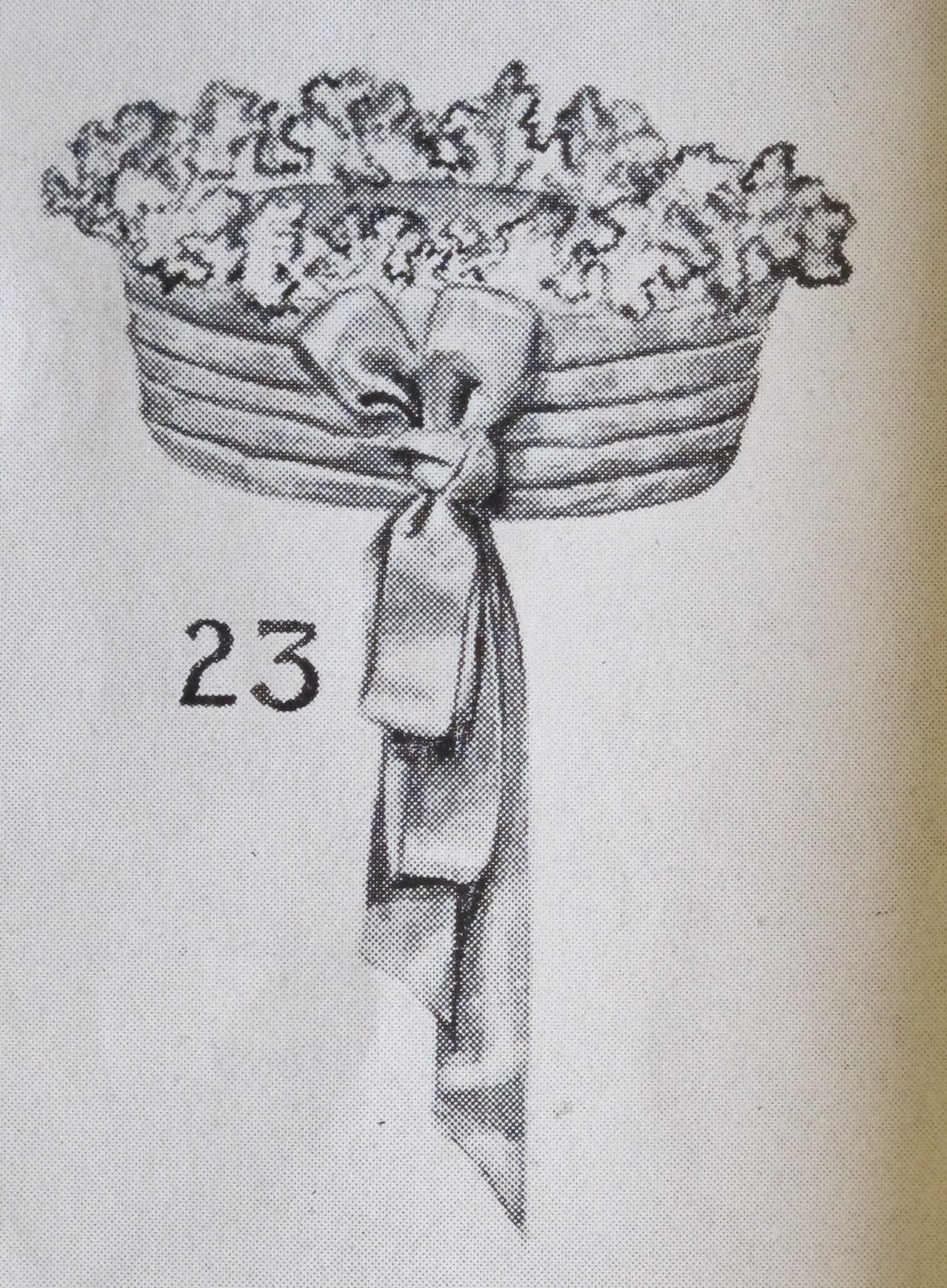
26. The New Ruche, deep pleated Net Frill and Black Satin Bow.
28. Collar Band of fine Cambric and Coloured Feather Stitching.


Latest French Novelty in Silk and Muslin Jabot. The Collar Band and Bow composed of soft silk ribbon and finished with an inner Frill of Tulle. Available in all the fashionable shades.


Fashionable Folded Satin Collar Band, finished with Net Frilling and Bow at the back. In all the best shades.


14. Dainty Silk and Lace Jabot, can be had in all the newest Colorings.
15. Dainty Neck Ruffle, in soft Satin with inner Ruche of Tulle, and finished at back with smart Bow. Can be made in any colour.

Wednesday, January 12, 2011

Modern Interpretations of the Ruff

Where do I go from here?


So I have had a bit of a play with ruffs, as you can check out if you go to one of my earlier blogs.


And we have had a look at what wonderful textile objects ruffs can be. And so now my question is, how can we make them art? I see them as art, but a genre that is not welcomed into art galleries, as they are one of the soft arts, one that is gentle and sweet, sexy and alluring, decorative. No longer attributed to high and worthy thoughts. And yet most of the masterpieces created from textiles, are created in love, one of the highest states of minds.


Ruffs have been popping up in designer collections in recent years, and I apologise for being really lazy and not noting the details of the site where this image came from. I will endeavour to do this in future I think, as I have chosen to use the internet as one of my major reference sources, as I want to see where it will take me.


Lovely!


Neck ruff: by Junya Watanabe from his "Techno Couture" collection, fall-winter 2000, photograph: Firstview.com

Textile jewellery sites, I will try to retrack down these sites and tell you a little more about them.


Hannah just like you envisaged, the falling ruff is definitely a modern take.


I like the Japanese take on the ruff, quite Gothic.


So there's some food for thought, and because I have found this so interesting I think I am going to start digging a little deeper, cos I am fascinated by edges, frills and ruffles that mark the borders, where one thing becomes another. Transition zones of costume, used to frame and enclose.

So my frilliant darlings. Live your life in joy, and treat yourself like Queens, while maintaining a warm loving centre around yourself that is a safe place for others, who will be drawn to rest in your presence.

Saturday, January 8, 2011

Thinking about Ruffs again

Neck ruffs intrigue me, I have been reading lovely blogs about making corsets and they are exquisite there is no denying it, but for me I love the little trimmings, the frill, the ruffle, the edge. Ruffs are all of these things and I am about to make some more. Here are some I have shown on a previous blog.


This one has a brocade standing collar and is trimmed with a fine cream cotton lace, that was made in India.


The threading techniques used to shape this ruff is one that I want to play with.


Historically ruffs have taken many forms.


The French Rococo ruff.


I love the many layers of what could only be the finest lawn, or muslin. I really want to make this one.


Ruffs were also very simple and plain at times, as shown in this portrait.


Or very ornate, and heavily starched.


This Elizabethan ruff, is made from a linen, plain and undecorated, it has an ease and comfort about it not often seen. I would like to wear this ruff.


They could be large and supported by under frames. What do you think of the ruff, as textile jewellry it is hard to beat. Next post I will show you some modern takes on the ruff.

Friday, December 24, 2010

Season's Greetings


There's something about a red dress that brings out the Christmas in me. Have a wonderful holiday season, full of happiness and joy.


Eat well, but not too much.


And stay fabulous my festive darlings.

Monday, December 20, 2010

Children's Clothes from the Lynda Braid Collection

Children's Clothing in the Victorian Era


Hallo my darling smunchkims. Today I want to take you back to the "Victorian era, when young children were seen and not heard, and to show you another wonderful piece of children's clothing from the Lynda Braid Collection. The image you see above is the cover of a Victorian magazine from 1884, called The Family Friend.


At this time ready made clothing was not as readily available as it is today, and Mother's were expected to sew their children's clothes, if they were not wealthy enough to employ servants to sew for them. The family Friend Magazine offered free patterns for children's clothes for home sewers to use, and here is a pattern for a child's pinafore.


Half a yard of diaper, this must have been the fabric used for early nappies, and the reason for their American name.


The insertion, is the lace.


The 1880's was the time of the Aesthetic Movement, a movement that encouraged healthy comfortable clothing.
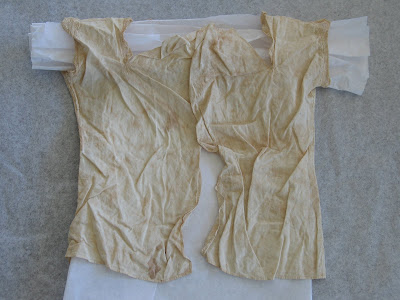

Here is another piece of children's clothing from my cousin Lynda's collection. At first glance it seems to be of little interest, it is in poor condition with extensive discolouration and heavily creased from storage.


It is difficult to make out the shape as it is so creased.


It is when you look closely at this little piece that it starts to shine, look at the handwork on the shoulder seam, and the lace around the armhole. This garment was made in an age when women were highly skilled needle workers, the lace is hand made, and the pinafore is completely sewn by hand.


The technique used on the shoulder seam is wonderful don't you think? I have never seen a seam sewn like this before. If you are a wonderfully clever darling, and know more about this technique, its name, or when it was popular, please let me know. I am not sure what era this little garment is from, it seems early 1800's maybe even 1700's to me, but I am woefully inadequate and lacking in expertise, so if you can add from a deeper fountain of knowledge, please let me know.